Written by Community Advocacy and Prevention Services Team at TurnAround
Sometimes, showing up for someone means finding a way to reach them when the places they call home cannot offer the safety they need.
There are moments in this work that stay with you long after the day is over. Moments that remind us why we chose this field, why compassion matters, and why community support is about so much more than providing a list of resources. They remind us that meaningful change often begins with simply showing up for someone when they need it most.
Sometimes, a family does not need just one thing. They need several things at once.
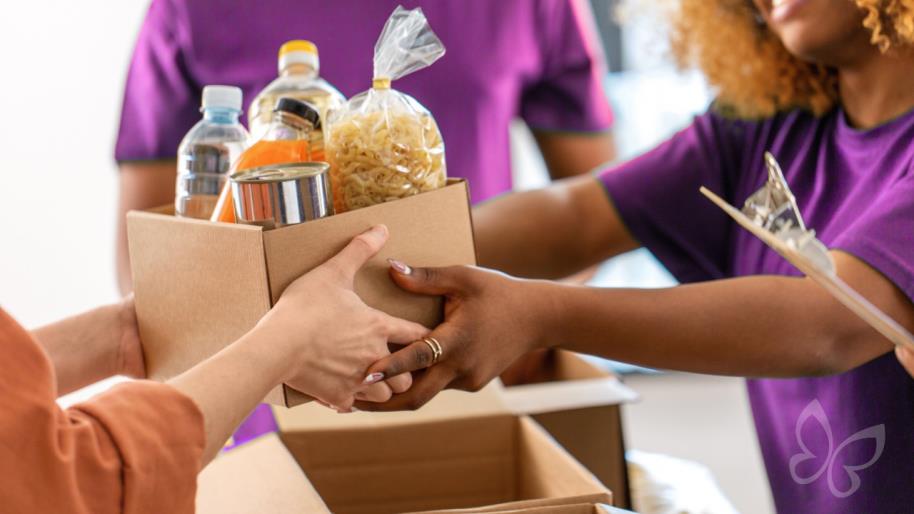
They may need food on the table, clothing, access to medical care, counseling, financial assistance, benefits, and someone who can help them understand what options are available. They may need support navigating systems that feel unfamiliar or frightening. And sometimes, before any of those needs can be addressed, they need someone willing to listen without judgment and help them figure out where to begin.
This is part of what community support makes possible.
At TurnAround, we understand that experiences of violence and abuse do not happen in isolation from the other challenges people face. Safety, housing, income, health, and emotional well-being are often connected. When one part of a person’s life is in crisis, the effects can reach far beyond that single circumstance.
Through our Community Advocacy and Prevention Services (CAPS) program, we work to help individuals and families affected by intimate partner violence, sexual violence, human trafficking, and exploitation connect with resources that support their safety, stability, and well-being.
And sometimes, doing that work requires us to look beyond the usual ways of providing help.
When support requires us to think differently
I remember a family our team supported, whose circumstances brought this reality into sharp focus. A young person had experienced sexual violence, and the family faced significant barriers to seeking medical attention and accessing support. Their immigration circumstances created fear about reaching out for help, and the family was also dealing with financial dependence and the difficult reality of sharing a home with the people who had caused harm.
There was no simple solution. The family was navigating trauma, fear, practical needs, and concerns about what seeking help might mean for them. Their needs extended well beyond any one service or referral.
As I reflected on this situation, I was reminded that knowing where resources exist is only one part of a complicated process. We also have to consider the barriers that may keep a person from reaching those resources in the first place.
For this family, meeting in the home was not the most appropriate option. So, our CAPS team began thinking differently about how we could connect with them. We considered neutral community locations, including a nearby grocery store or library, where conversations and support could take place away from the home.
It may sound like a small adjustment, but it represented something important: we were willing to adapt our approach to the family’s circumstances rather than expect the family to fit into ours.
Our team began thinking through the family’s needs together. Food and clothing matters. Access to medical care and therapy matters. Benefits, income, and consistent individual support matter. Just as importantly, we had to consider how these needs connected and which community resources could help them best.
We could not solve every challenge in one conversation. We could, however, work together to identify options, explore connections, and make the next steps feel more manageable.
That experience stayed with me because it showed what can happen when a team brings its knowledge, compassion, creativity, and resources together around the needs of a family.
It reminded me that advocacy is not always a grand gesture. Sometimes, it is a team sitting down to think through a difficult situation and asking, how can we make support possible for this family, given what they are facing right now?
That question can change the way we work.
The power of a connected community
No single program can meet every need a family may have; that is why community partnerships are so important.
Through CAPS, we recognize that meaningful support often requires collaboration with organizations and providers who can help address different parts of a person’s circumstances. A connection to food assistance may ease one immediate worry. Access to clothing may help meet another need. A connection to medical care, counseling, benefits, legal assistance, or other community resources may open additional pathways toward stability.
Each connection matters, but the connections matter even more when they work together.
For families who face financial hardship, fear, language barriers, or concerns about their immigration circumstances, accessing support can feel especially complicated. They may worry about whether it is safe to ask for help, whether they will be understood, or whether seeking assistance could create other problems for their family.
We cannot assume that having a resource available means a person can easily access it. Community support asks us to look at those barriers with compassion and to work together to reduce them wherever possible. It asks us to be flexible, to listen, and to recognize that people are often carrying more than we can see.
It also reminds us that helping is not always about having every answer. Sometimes, it is about knowing who to call, which partner may be able to help, how to coordinate services, or how to approach a situation in a way that respects a family’s needs and circumstances.
This is one of the things I value about the work of our CAPS team. We bring different skills and perspectives to the table, and we continue to look for ways to turn those skills into meaningful support. We understand that behind every referral is a person, and behind every request for assistance may be a much bigger picture.
Our responsibility is to always see the bigger picture.
Sometimes, the smallest acts carry the greatest meaning
Experiences like this can stay with you because they remind you that the work is not simply about completing a referral, documenting a service, or meeting a program goal. Those things have their place, but the reason behind the work is much bigger.
It is about people.
It is about a family trying to navigate circumstances they never expected to face. It is about a young person who deserves safety, care, and the opportunity to move forward. It is about recognizing that asking for help can be difficult, especially when the barriers are complicated and the consequences feel uncertain.
As someone who leads a team doing this work, situations like this also remind me of the importance of making space for our staff to think creatively, collaborate, and use the resources available to them. We have to be willing to ask questions, look at a situation from different angles, and recognize when the usual approach may not be the right approach.
Most of all, we must remember that people deserve support even when their circumstances are complicated.
We may not be able to change everything a family is experiencing. We cannot promise that every door will open or that every challenge will disappear. But we can work to make the next connection possible. We can help people understand their options. We can approach their circumstances without judgment. And we can continue working alongside community partners to build pathways to support that might otherwise be difficult to find.
That is what community makes possible.
We all have a part to play
At TurnAround, our work is rooted in the belief that people affected by violence deserve to be treated with dignity, compassion, and respect. Through CAPS and our broader agency efforts, we continue to work toward a community where support is accessible, and people are not left to navigate difficult circumstances alone.
But building that kind of community takes more than one organization. It takes partners who are willing to collaborate, providers who listen, neighbors who care, and systems that recognize the different barriers people face.
It takes a willingness to look beyond the first problem someone shares and understands that there may be other needs beneath the surface.
And it takes remembering that we may never know the full story behind someone’s request for help.
That family reminded me of why this work matters. Not because we had an easy answer, but because we were willing to keep looking for a way forward together.
Sometimes, hope does not arrive as one big moment. Sometimes, it begins with a conversation in a place where someone feels more comfortable. Sometimes, it looks like a team making calls, identifying resources, and finding a different way to reach a family. Sometimes, it is simply the realization that someone is willing to stand beside you while you figure out what comes next.
Community support cannot erase what someone has experienced, but it can help make the path forward less lonely and the possibilities ahead a little more reachable.
We may not be able to do everything. But when we bring our resources, our knowledge, and our compassion together, we can do more than we ever could, alone. And sometimes, that is where change begins.
Support is available. If you or someone you know has experienced violence or abuse, support is available. You do not need to have all the answers before reaching out, and you can explore your options at your own pace.
National Domestic Violence Hotline
- Call: 800-799-SAFE (7233)
- Text: START to 88788
- Website: thehotline.org
Local Support
Please contact your local rape crisis center for assistance. In the Baltimore area, you can reach TurnAround’s 24/7 hotline at 443-279-0379.
In an Emergency
If you or someone else is in immediate danger, call 911 when it is safe to do so.